
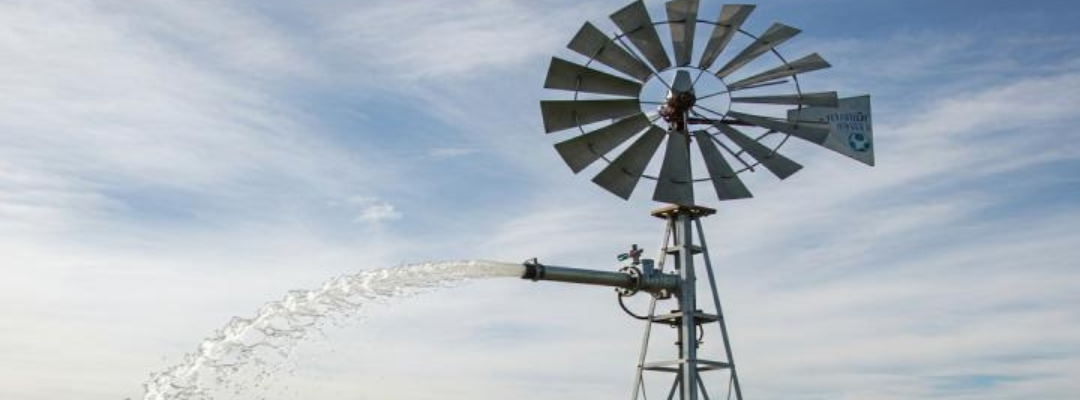
Water is one of the biggest needs in farming and rural life. But moving water needs energy, and that energy can be costly or unreliable in some places. This is why small wind can be useful for water pumping. In India, official small-wind programmes have specifically included water pumping as a target use, along with rural electrification and hybrid systems. WRI India also notes that small wind can be used for mechanical work like pumping water and other agricultural applications.
What does small wind for water pumping mean?
It means using a small wind turbine to help move water for irrigation, livestock, storage, or local supply. The system may pump water directly, or it may generate electricity that runs a pump. In both cases, the goal is simple: use local wind to support a local water need. That is why small wind can be a practical choice in some rural and agricultural settings.
Where does it make sense?
Small wind for water pumping makes the most sense in places that have three things together: a good wind resource, a real and regular need for water, and a reason to reduce dependence on diesel or weak grid power. India’s Ministry of New and Renewable Energy says wind is an intermittent and site-specific resource, so proper wind-resource assessment is essential before choosing a site. In simple words, small wind works best where the wind is actually good enough to do the job.
It works best in open and windy rural areas
This type of system is more suitable in open land than in crowded places. Farms, grazing land, remote fields, village edges, and other exposed locations usually offer better wind flow than built-up areas. NIWE programme material and presentations around small wind have repeatedly linked the technology with rural uses, water pumping, and remote applications.
It is useful where diesel pumping is expensive
Many farms still depend on diesel for pumping water. That creates a running fuel cost and also makes the operation harder when fuel is costly or difficult to access. A small wind system can help in locations where wind is available, and pumping happens often enough to justify the system. This is one reason water pumping has remained a core application in India’s small-wind programme.
It can fit agriculture well
Water pumping is closely linked to farming, so small wind can be a good match where agriculture depends on regular water movement. WRI India notes that mechanical use of small wind includes pumping water and other farm-related work. That makes small wind more than just a power technology. In the right place, it becomes a farm support system.
It can be more useful in hybrid systems
Small wind does not always need to work alone. In many real projects, it can work better when combined with solar or storage. India’s small-wind programme itself covers hybrid systems, which shows that wind can be part of a broader setup rather than a stand-alone solution. For water pumping, this can help improve reliability across different weather conditions and times of day.
Where does it not make sense?
It usually does not make sense in places with poor wind, too many obstacles, or very limited pumping demand. If the wind is weak or highly uneven, the system may not give enough useful output. It also may not be the right choice where another solution can meet the water needs more simply or at a lower overall cost. Since wind performance depends so much on the site, small wind should not be treated like a one-size-fits-all product