
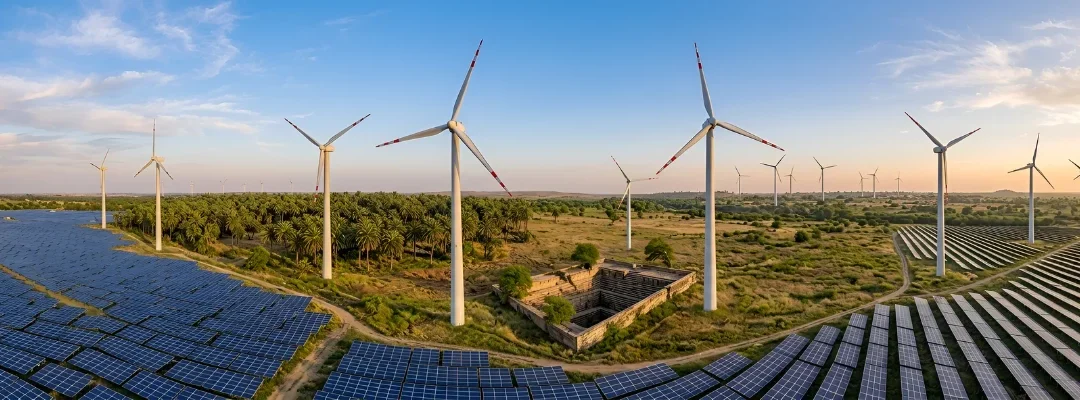
A hybrid energy system does not perform the same way in every location. In India, site conditions can change sharply from one place to another. A coastal property, a rural farm, a semi-urban building, and a remote site may all have very different wind exposure, solar performance, space limitations, and power needs.
That is why a solar + wind hybrid system should never be planned as a standard package. The right setup depends on the actual site.
At Synergy Wind Systems, we treat hybrid systems as site-based solutions. The same equipment size may work well in one location and underperform in another.
Why Indian Site Conditions Matter in Hybrid Design
A hybrid system works best when solar and wind support each other in a practical way. But that depends on several real factors:
- How Much Sunlight The Site Receives
- Whether The Wind Is Usable And Reasonably Consistent
- How Much Space Or Installation Height Is Available
- When The Power Is Needed
- Whether The Site Has Strong Grid Support, Weak-grid Supply, Or No Grid At All
This is why Indian site conditions matter so much. Different location types need different hybrid strategies.
1. Coastal Sites
Coastal locations are often among the stronger candidates for solar + wind hybrid systems. In many coastal areas, wind movement can be more useful than in inland locations, while solar exposure is still good.
Why hybrid can work well here
- Solar Supports Daytime Energy Needs
- Wind May Contribute During Evenings, Nights, Or Cloudy Periods
- The Wind Side Of The System May Play A Stronger Role Than It Does In Many Inland Projects
Common use cases
- Coastal Homes And Villas
- Resorts And Hospitality Buildings
- Fisheries And Marine Support Sites
- Shoreline Or Island Properties
What needs extra care
- Corrosion Risk From Salty Air
- Proper Mounting And Structural Protection
- Correct Material And Equipment Selection For Outdoor Exposure
Practical example
A coastal resort may use more power beyond daytime hours for lighting, cooling, and service operations. In such a site, a hybrid system can make more sense than solar alone because wind may continue contributing after solar output falls.
2. Rural Sites
Rural properties are one of the most practical use cases for hybrid systems, especially where land is available and power reliability is weaker.
Why hybrid can work well here
- Open Land May Improve Wind Exposure
- Solar Installation Is Often Easier To Arrange
- Many Rural Loads Continue Beyond Daytime Hours
- Energy Needs May Include Irrigation, Utility Loads, And Evening Use
Common use cases
- Farms And Irrigation Sites
- Rural Houses And Farmhouses
- Agri-processing Units
- Water Pumping And Storage Systems
What should be checked
- Actual Wind Quality, Not Only Open Space
- Distance From Trees, Sheds, Or Nearby Structures
- Day And Night Load Pattern
- Battery Requirement For Backup
Practical example
A farm may need irrigation in the day and utility loads or lighting in the evening. In such a case, a balanced hybrid setup may perform better than a solar-only system, but only if the wind resource is genuinely useful.
3. Semi-Urban Sites
Semi-urban locations can be suitable for hybrid systems, but they usually need more careful evaluation than open rural or coastal areas.
Why these sites are different
- Solar Potential May Still Be Good
- Wind Can Be Affected By Nearby Buildings And Mixed Development
- Rooftop Space May Exist, But Airflow May Not Be Clean
- Turbulence Can Reduce The Value Of The Wind Side
Common use cases
- Schools And Colleges
- Small Industries
- Clinics And Service Centres
- Commercial Buildings
- Apartment Common Loads
Main challenge
In semi-urban areas, solar is often easier to justify than wind. The wind side should be added only when the site has enough height, clear exposure, and reasonably low turbulence.
This is why many semi-urban hybrid systems become solar-dominant with selective wind support, rather than equal solar and wind combinations.
Practical example
A semi-urban school may have good rooftop solar potential but poor rooftop wind because of surrounding buildings. In that case, a solar-heavy hybrid setup may be more practical than trying to force a larger wind share into the design.
4. Remote Sites
Remote locations are one of the strongest applications for hybrid systems. These are places where grid supply is weak, unstable, or completely unavailable.
Why hybrid is useful here
- Solar Alone May Not Be Enough For Round-the-clock Needs
- Wind May Support Power During Non-solar Hours
- Battery Charging Can Become More Stable
- Diesel Dependence May Reduce
- Continuity Often Matters More Than Simple Cost Savings
Common use cases
- Telecom Towers
- Remote Offices And Cabins
- Security Posts
- Hill Properties
- Isolated Utility Buildings
What matters most
- True Wind Resource At Installation Height
- Backup Requirement
- Battery Sizing
- Maintenance Access
- Long-term Reliability
Practical example
A remote telecom site may need steady power day and night. In such a case, hybrid design is not mainly about lowering electricity bills. It is more about improving power continuity and reducing excessive dependence on only batteries or diesel.
What Changes from One Indian Site to Another
Even when the system type looks similar, the design may still change because of:
- Wind Speed And Wind Consistency
- Solar Exposure
- Rooftop Or Land Availability
- Seasonal Weather Pattern
- Local Power Cut Frequency
- Site Accessibility
- Structure Height And Nearby Obstacles
This is why a hybrid system should not be copied from one project to another without site review.
When a Hybrid System Makes More Sense
A solar + wind hybrid system becomes a stronger option when:
- The Site Has Usable Solar And Wind Potential
- Power Is Needed Beyond Daytime Hours
- The Location Has Weak Or Unreliable Supply
- Battery-only Backup Would Become Too Large Or Costly
- The Wind Side Can Add Real Value During Low-solar Periods
If the wind resource is weak, then a solar + battery system may be the more practical choice.
A Simple Comparison by Site Type
Coastal
Often better for stronger wind contribution, but corrosion protection is critical.
Rural
Usually more practical for balanced hybrid planning because land is available and loads often continue beyond daytime.
Semi-Urban
Often more solar-dominant because wind may be disturbed by buildings and mixed development.
Remote
Often one of the strongest hybrid use cases because continuity matters more than convenience.
FAQs
Are coastal sites better for solar + wind hybrid systems?
In many cases, yes. Coastal areas can offer better wind support along with good solar exposure, but corrosion protection and equipment durability are very important.
Are rural sites suitable for hybrid systems?
Yes. Rural sites are often strong candidates because they usually have more open space and more need for reliable energy beyond daytime hours.
Can semi-urban buildings use hybrid systems?
Yes, but wind suitability must be checked carefully. Many semi-urban projects are more solar-dominant because nearby structures affect airflow.
Why are remote sites good for hybrid systems?
Because remote sites often need more stable energy where grid power is weak or unavailable. Hybrid systems can improve continuity and reduce dependence on only batteries or diesel.
Is the same hybrid system suitable for all Indian locations?
No. Every site should be checked individually for wind, solar, load pattern, and installation feasibility.