
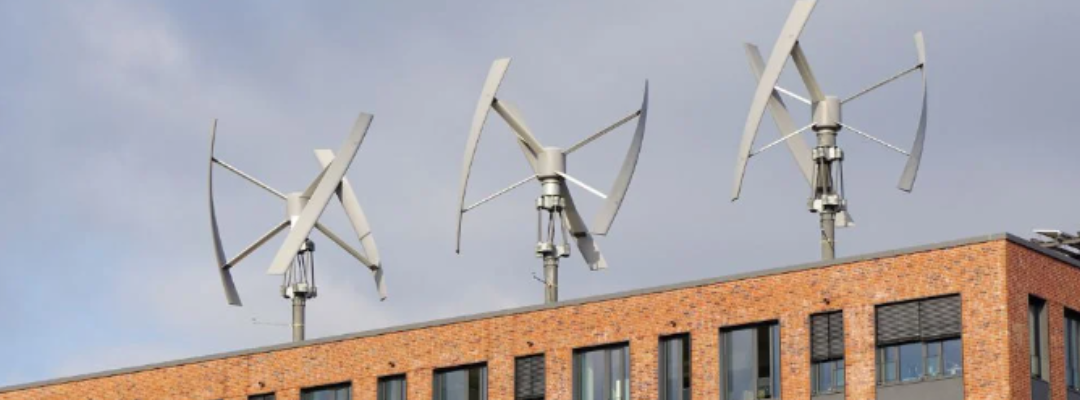
Many people ask this question when they look for clean energy for a home, office, school, or factory building. The simple answer is yes, small wind turbines can work on rooftops, but not in every case.
A rooftop may look like a good place for a wind turbine because it is high above the ground and does not need extra land. But wind energy is not only about height. It is also about good wind flow, safe installation, and the right building.
What is a small wind turbine?
A small wind turbine is a smaller system that uses wind to make electricity. It is usually used for local power needs. It can support homes, farms, schools, small businesses, remote sites, or other buildings that want extra power from renewable energy.
Small wind turbines are very different from the large wind turbines used in wind farms. They are smaller in size and are made for site-level power use.
Why do people want rooftop wind turbines?
Rooftop wind turbines sound attractive for simple reasons.
First, the roof is already there, so people think they can save space.
Second, a rooftop system may look like an easy way to use wind without building a separate tower.
Third, many businesses and building owners want to reduce energy costs and use cleaner power.
Because of this, rooftop wind gets a lot of attention. But a rooftop is not always the best place for a wind turbine.
The biggest challenge: wind on rooftops is not always good
A wind turbine needs strong and smooth wind to work well. On many rooftops, the wind is not smooth. It becomes weak, uneven, and turbulent because of walls, nearby buildings, water tanks, trees, and other structures.
This means the turbine may spin, but it may not produce as much useful power as expected.
In simple words, a rooftop can have wind, but not the right kind of wind.
Can rooftop wind turbines really work?
Yes, they can work in the right conditions.
A small wind turbine can work on a rooftop if:
- The building is in an open area
- The location gets steady wind
- There are not many nearby obstacles
- The roof is strong enough to support the system
- The turbine size matches the site
- The system is installed after proper technical checks
So the answer is not just yes or no. It depends on the site.
Where rooftop wind is more likely to work
Rooftop wind may work better in places like:
- coastal areas
- open industrial sites
- remote buildings
- hilly regions
- campuses with less surrounding blockage
- buildings with strong structure and enough space
In these places, wind flow may be better than in crowded city areas.
Where rooftop wind usually does not work well
Rooftop wind usually does not work well in:
- crowded cities
- buildings surrounded by taller buildings
- places with many trees or obstacles
- weak roofs
- sites with low wind speed
- locations where noise and vibration can become a problem
In these places, the turbine may not give good output. It may also need more maintenance.
Noise and vibration matter too
A rooftop wind turbine does not only need wind. It also becomes part of the building environment.
If the turbine creates vibration, that vibration can move into the building structure. This may cause discomfort or other issues if the system is not designed well.
Noise can also become a concern, especially in residential or office buildings.
That is why rooftop wind systems need proper planning, not just installation.