
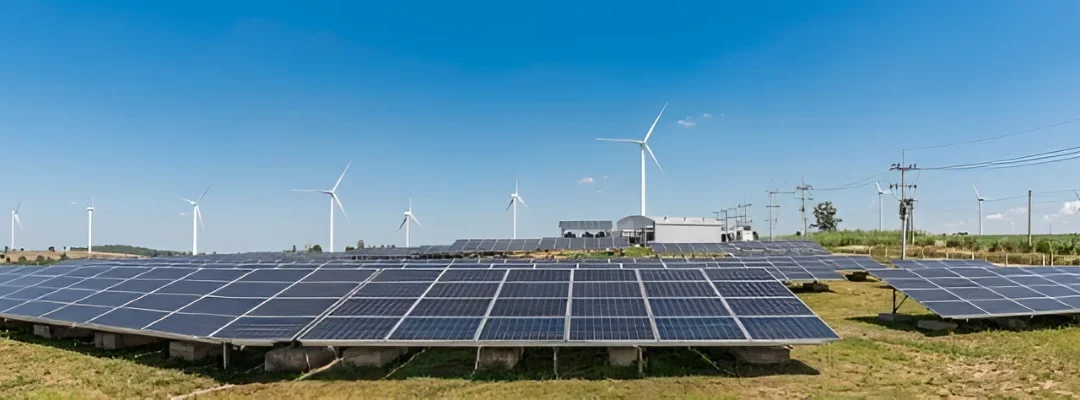
A hybrid energy system does not work well just because it has solar panels, a wind turbine, and a battery. What makes the system perform properly is the way all these parts are controlled.
In a solar + wind hybrid setup, power is always changing. Solar is stronger during the day. Wind may increase in the evening, at night, or during cloudy periods. Battery charge level keeps changing. The load also changes based on how electricity is used.
That is why smart controls are important. They help the system decide where power should go, when the battery should charge or discharge, and how the available energy should be used safely and efficiently.
At Synergy Wind Systems, we treat control strategy as a core part of hybrid system planning because a hybrid setup is only as good as the way it is managed.
What Smart Controls Actually Do
A smart controller acts like the decision-making part of the system.
It continuously checks:
- Available Solar Power
- Available Wind Power
- Battery Charge Level
- Current Load Demand
- Charging And Discharging Conditions
- System Protection Status
Instead of allowing each source to operate without coordination, the controller manages how energy moves through the system.
This helps the system stay stable and use the available renewable power more effectively.
How Smart Controls Manage Solar and Wind Together
Solar and wind do not generate in the same pattern.
Solar is usually more predictable and mainly available during daylight hours. Wind is less predictable, but it may contribute during evening hours, at night, or during cloudy conditions.
A smart controller keeps checking both sources and uses them according to availability.
For example:
- when solar is strong, it may run the load first and charge the battery
- when solar becomes weaker and wind is available, wind may support the load or battery
- when both sources are available together, the system may divide energy between immediate load use and battery charging
This coordination is one of the main reasons hybrid systems can perform better than single-source systems.
How Smart Controls Manage the Battery
Battery management is one of the most important jobs in a hybrid energy system.
The controller helps decide:
- When The Battery Should Charge
- When It Should Discharge
- How Deeply It Should Be Used
- When Charging Should Stop
- When Discharge Should Be Limited To Protect Battery Life
This matters because poor battery control can shorten battery life quickly.
If charging continues too long, the battery may be damaged. If discharge goes too deep too often, performance and lifespan may drop. A smart controller helps prevent this and makes better use of stored energy across changing solar and wind conditions.
How Smart Controls Manage the Load
The controller also decides how available power should be used.
This is called load management.
In many systems, the controller may give priority to:
- Critical Loads First
- Battery Charging Next
- Lower-priority Loads After That
For example, important loads such as lighting, communication equipment, control systems, or pumps may be kept active first. Less important loads may be delayed, limited, or disconnected when energy availability becomes low.
This kind of load priority helps the system remain more reliable during changing power conditions.
A Simple Real-Use Example
A hybrid site may behave like this over one day:
Morning
Solar begins to increase. The controller may first support the active load and then start charging the battery if extra power is available.
Afternoon
Solar output is stronger. If wind is also available, the controller may use both sources to support the load and improve charging.
Evening
Solar starts to drop. If wind rises, the controller may use wind to keep supporting the load or continue battery charging.
Night
There is no solar input. The controller may use wind if available and allow the battery to support only the most important loads.
This is where smart control becomes valuable. It keeps adjusting the system as conditions change instead of treating the whole day in one fixed way.
Why Smart Controls Matter in Real Operation
A hybrid energy system is never operating under exactly the same conditions all the time.
- Solar Output Changes With Sunlight
- Wind Changes With Weather And Time
- Battery Condition Changes With Charging Cycles
- Load Changes Depending On Usage
Smart controls keep responding to these changes in real time.
This helps:
- Improve Power Stability
- Reduce Unnecessary Battery Stress
- Use Renewable Power More Efficiently
- Reduce Poor Switching Between Sources
- Keep Critical Loads Supported More Effectively
Without proper controls, the system may still run, but it may not run well.
Smart Controls Also Help Protect the System
A good controller does more than manage energy flow. It also protects the system.
It can help prevent:
- Battery Overcharging
- Deep Battery Discharge
- Overload Conditions
- Poor Switching Between Sources
- Wrong Power Priority
- Unnecessary Shutdowns
This becomes especially important in off-grid, backup-focused, and remote hybrid systems where reliability matters more.
Monitoring Makes the System Easier to Manage
Modern hybrid systems often include monitoring along with smart control.
This can help users or operators view:
- Solar Generation
- Wind Generation
- Battery Status
- Load Use
- Charging And Discharging Behavior
- Warnings Or Fault Conditions
This kind of visibility helps in two ways. It makes day-to-day operation easier, and it also helps with maintenance planning because the system can be checked before a small issue becomes a bigger problem.
Why the Controller Is a Big Part of Hybrid System Value
Many people look first at solar panel size, turbine size, or battery capacity. Those are important, but they do not work well without proper coordination.
The controller is what makes all these parts work together as one system.
A well-designed control strategy helps:
- Improve Real-world Stability
- Protect The Battery
- Use Renewable Energy More Effectively
- Support Important Loads Better
- Improve Overall System Behavior
That is why smart control is not a secondary feature. It is one of the key parts of hybrid system value.
What Happens When Control Strategy Is Weak
A hybrid system may underperform even when the equipment is good if the control logic is poor.
This can lead to problems such as:
- Unnecessary Battery Cycling
- Poor Use Of Wind During Non-solar Hours
- Solar Energy Not Being Used Effectively
- Critical Loads Not Getting Proper Priority
- Unstable Switching Between Sources
- More Stress On The Full System
So the quality of the control strategy affects not only performance, but also long-term reliability.
FAQs
What is the role of a controller in a hybrid energy system?
The controller manages how solar, wind, battery, and load work together. It decides when power should be used, stored, limited, or protected.
Why are smart controls important in solar + wind hybrid systems?
Because solar and wind do not generate in the same way. Smart controls help balance these changing inputs and keep the system more stable.
Can smart controls improve battery life?
Yes. Good control logic can help avoid overcharging, deep discharge, and unnecessary battery stress.
What is load priority in a hybrid system?
Load priority means the controller gives power first to the most important equipment before allowing power to less critical loads.
Does every hybrid system need smart controls?
Yes. The more variable the system is, the more important smart control becomes for proper operation.
Can monitoring help improve hybrid system maintenance?
Yes. Monitoring helps users and operators understand generation, battery behavior, load use, and warning conditions, which can improve maintenance planning.