
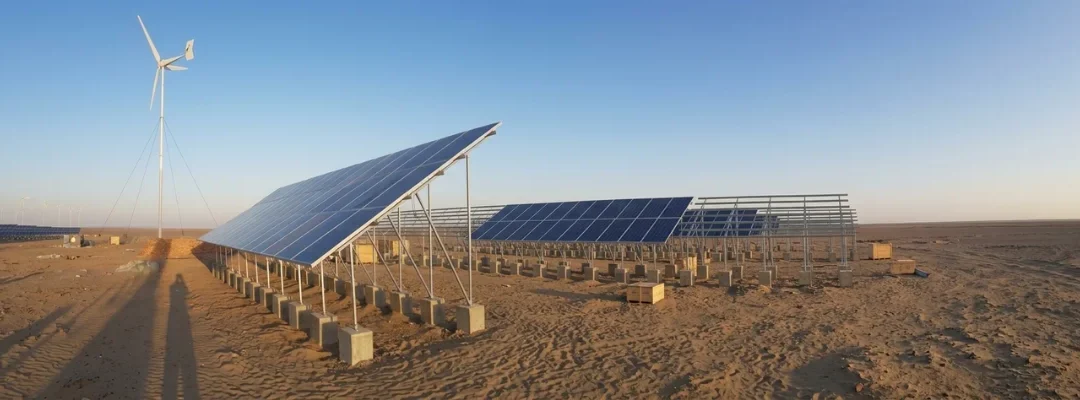
A solar + wind hybrid system works well only when both energy sources are actually available at your site. Solar is usually easier to understand because sunlight patterns are more predictable. Wind is different. It changes with height, nearby obstacles, site layout, and seasonal conditions.
That is why many hybrid systems underperform. The problem is not always the turbine or the solar panels. In many cases, the site simply does not have enough usable wind to justify the wind part of the system.
At Synergy Wind Systems, one of the most common questions we hear is:
How do I know whether my site has enough wind for a solar + wind hybrid setup?
The answer starts with proper site screening. This blog explains the main things you should check before investing in a hybrid system.
Why Wind Suitability Matters in a Hybrid System
In a solar + wind hybrid setup, the wind turbine is usually expected to support energy generation when solar output becomes lower, such as during cloudy weather, evening hours, or certain seasons.
But this only works when the site has consistent and usable wind.
If the wind resource is weak, the turbine may still spin from time to time, but the real energy contribution may remain too low to make the investment worthwhile. In that case, a solar-only system or a solar + battery setup may be the better option.
1. Start With a Practical Wind Speed Screening Range
The first thing to understand is that a small wind turbine needs more than occasional breeze.
As an early practical screening range, a site usually becomes more worth evaluating when average wind speed is around 4.5 to 5.5 m/s, with stronger potential at 6 m/s and above.
Below that range, the turbine may rotate, but actual generation can remain too low for good long-term value.
This matters because wind power changes quickly with wind speed. Even a small drop in wind speed can reduce output significantly. In the same way, a slightly better wind site can perform much better over time.
This is not a final design rule, but it is a useful first screening point.
2. Check Wind at Installation Height, Not at Ground Level
Many people judge wind by what they feel while standing on the ground. That is not enough.
What matters is the wind available at the actual installation height.
For small hybrid systems, this usually means checking wind at:
- Rooftop height, often around 10 to 15 meters, or
- Tower height, often around 15 to 30 meters for small turbines
Wind speed usually increases with height. At the same time, lower levels are affected more by walls, buildings, trees, and other obstacles.
So a site that feels calm at ground level may perform better higher up. On the other hand, a site that feels windy on the ground may still be poor if the airflow is irregular and turbulent.
3. Check Whether the Airflow Is Clean
A wind turbine does not only need wind. It needs clean airflow.
If wind is blocked or disturbed by buildings, trees, walls, rooftops, or nearby structures, turbulence increases and performance drops.
Sites that are often more favorable include:
- Open farmland
- Coastal properties
- Elevated land
- Large campuses
- Industrial sites with wide spacing
Sites that are often more difficult include:
- Dense residential areas
- Rooftops surrounded by taller buildings
- Properties with heavy tree cover
- Congested commercial zones
A practical rule is simple: the turbine should have access to smoother airflow, not just any moving air.
4. Look for Early Field Signs Before Detailed Study
Even before using instruments, you can often spot clues about whether a site may be promising.
Positive signs
- Trees Leaning Consistently In ONE Direction
- Flags Staying Extended For Long Periods
- Regular Breeze In The Evening Or Night
- Nearby Wind Installations In Similar Conditions
- Open Terrain With Visible Wind Exposure
Negative signs
- Still Air Most Of The Time
- Wind Only During Storms Or Short Bursts
- Highly Gusty And Irregular Movement
- Heavy Blockage From Buildings Or Trees
The key is not occasional strong wind. The key is usable wind over time.
5. Check Whether Wind and Solar Complement Each Other
One of the main reasons people choose a hybrid system is because solar and wind can support each other.
A good hybrid pattern often looks like this:
- stronger solar in sunny periods
- stronger wind during cloudy seasons, evening periods, or monsoon months
This is where hybrid systems can make real sense.
Before choosing a wind turbine, ask:
- Does the site get more wind when solar becomes weaker?
- Is wind available during cloudy months?
- Does the site get useful wind in the evening or night?
- Do both solar and wind become weak at the same time?
If both resources drop together, the value of hybrid becomes much lower.
6. Do Basic Screening Before Spending on Full Analysis
Not every site needs a full wind study at the start. It is better to begin with simple checks.
A practical early review may include:
- Local Weather Information
- Area-level Wind Data
- Regional Renewable Resource Maps
- Nearby Project References
- Basic On-site Observation
- Rough Review Of Rooftop Or Tower Position
If the site still looks promising after this stage, then you can move to a more detailed review, such as:
- Short-term Measurement Using An Anemometer
- Height-based Wind Review
- Obstacle And Turbulence Check
- Placement And Installation Study
- Expected Output Estimation
At Synergy Wind Systems, we always recommend checking site conditions before finalizing turbine size or making generation promises.
7. Know When Wind May Not Be the Right Choice
This is an important part of good system planning.
Not every site is suitable for the wind part of a hybrid setup. In some cases, adding wind only increases cost without adding enough energy value.
A small wind turbine may not be the right choice when:
- Average Wind Speed Is Too Low
- The Site Is Heavily Obstructed
- Wind Comes Only In Short Gusts
- Turbulence Is High
- Rooftop Conditions Are Poor
- There Is No Practical Height For Installation
In such cases, a solar-only or solar + battery system may be more practical and cost-effective.
8. When a Solar + Wind Hybrid System Becomes a Strong Option
A hybrid setup becomes more attractive when the site has:
- Moderate To Strong Wind Potential
- Useful Seasonal Balance Between Solar And Wind
- Regular Power Demand Beyond Daytime Hours
- Enough Space Or Structural Suitability For Correct Turbine Placement
- A Real Need For Better Energy Continuity
This kind of setup is often more practical for:
- Farms And Irrigation Sites
- Remote Buildings
- Telecom Towers
- Institutional Campuses
- Rural Properties
- Coastal Locations
- Off-grid Cabins And Utility Buildings
9. Be Extra Careful With Rooftop Wind
Many people assume that if a roof is good for solar, it will also be good for wind. That is not always true.
Rooftop wind needs extra care because roofs can create:
- Turbulence
- Vibration Concerns
- Structural Loading Issues
- Lower Real Output Than Expected
A roof may be excellent for solar and still poor for wind.
That is why rooftop wind should always be checked case by case.
10. A Simple Screening Checklist
Before moving ahead with a solar + wind hybrid system, ask these questions:
- Does the site have moderate and reasonably consistent wind?
- Is the wind available at turbine height, not just at ground level?
- Are there limited obstacles around the turbine position?
- Does wind improve when solar becomes weaker?
- Is the site open enough for practical installation?
- Will wind add real value to the total system?
If the answer is yes to most of these questions, the site may be worth evaluating further for hybrid wind support.
FAQs
How much wind is needed for a solar + wind hybrid system?
As an early screening benchmark, sites with average wind speeds around 4.5 to 5.5 m/s or higher are generally more worth evaluating for small wind support.
Can I install a small wind turbine on any rooftop?
No. Rooftop wind depends on airflow quality, building height, nearby obstacles, and structural suitability. Not every roof is a good wind site.
Why does wind at height matter more than ground-level wind?
Because wind speed usually increases with height, and airflow near the ground is affected more by obstacles and turbulence.
What is better if my site has low wind?
If the wind resource is weak, a solar-only or solar + battery setup is often the more practical option.
Which sites are usually better for solar + wind hybrid systems?
Farms, rural properties, coastal locations, remote buildings, telecom sites, and open institutional campuses are often better candidates.