
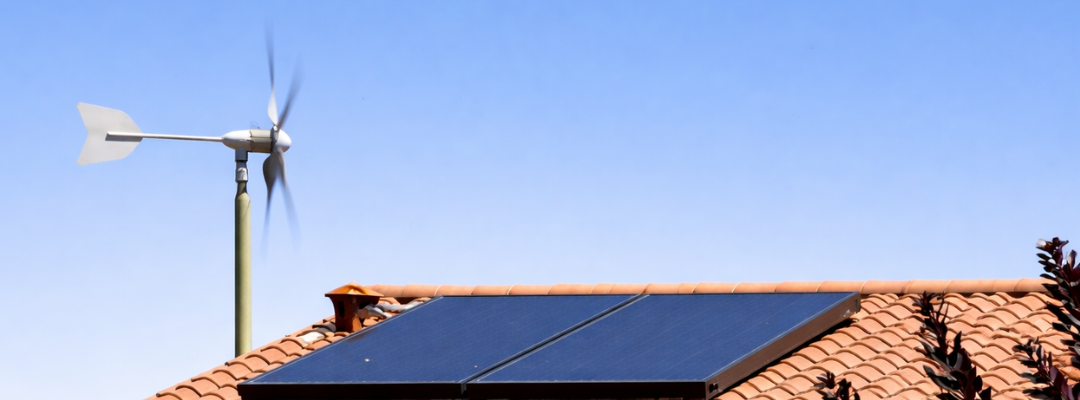
A solar + wind hybrid system can be a smart energy solution, but it is not the right fit for every property. Many people assume that combining solar panels and a wind turbine will always give better performance than using only one renewable source. In reality, a hybrid energy system works best only when the site conditions, load profile, installation space, and energy expectations are properly matched.
For some locations, a solar wind hybrid system can improve power availability, reduce dependency on the grid, and support energy needs across different times of the day. For other sites, it may add cost and complexity without giving enough practical benefit.
This guide explains where a hybrid renewable energy system actually makes sense, where it may not, and what you should evaluate before planning a project.
What Is a Solar + Wind Hybrid System?
A solar + wind hybrid system combines solar panels and a wind turbine in one power setup. The system may also include batteries, charge controllers, an inverter, protection devices, and grid or generator backup depending on the application.
The basic idea is simple:
- Solar panels generate power during sunlight hours
- Wind turbines can generate power whenever useful wind is available
- Battery storage can hold excess energy for later use
- The controller and inverter manage power flow to the load
This combination is often considered when one energy source alone may not provide enough consistency through the day, night, or changing seasons.
Why People Consider a Hybrid Energy System
A single renewable source does not perform the same way at all times. Solar depends heavily on daylight and weather. Wind depends on local wind speed, direction, exposure, and turbulence. A solar and wind energy system is often considered because the two sources may support each other under the right site conditions.
A well-planned hybrid energy system can help in the following ways:
- Better energy support across different times of the day
- Improved supply for essential loads
- Reduced dependence on unstable grid supply
- More flexibility for remote and off-grid locations
- Better use of site resources where both sun and wind are available
However, this only works when the location is genuinely suitable for both solar and wind.
Where a Solar + Wind Hybrid System Makes Sense
1. Remote locations with limited or unreliable grid access
A solar wind hybrid system is often most useful in remote buildings, rural properties, telecom sites, isolated commercial spaces, site cabins, and locations where grid extension is difficult or expensive.
In such cases, hybrid energy can reduce dependence on diesel backup and improve renewable energy contribution over a longer part of the day.
Typical examples include:
- Remote houses and farmhouses
- Telecom towers
- Security cabins and site offices
- Rural institutions
- Island or coastal properties
- Off-grid service buildings
2. Sites with good solar resource and real wind potential
A hybrid setup makes sense only where both resources are usable. A site with strong sunlight but very poor wind may be better suited to a solar-only system. Similarly, a site with good wind exposure but limited solar installation area may need a different design approach.
The most suitable hybrid locations are often places with:
- Open surroundings
- Better wind exposure
- Low obstruction from nearby buildings or trees
- Usable roof or ground space for solar panels
- Sufficient separation and safety for wind installation
3. Properties that need better power support beyond daylight hours
Solar production mainly happens during daytime. A wind turbine may support the system during evening, night, early morning, or cloudy weather depending on site conditions. That is one reason a hybrid renewable energy system is often considered for locations where energy is needed over a wider time window.
This can be useful for:
- Lighting and essential home loads
- Pumps and rural utility loads
- Common area loads
- Communication equipment
- Refrigeration support
- Small commercial operations with extended working hours
4. Coastal, open, and exposed areas
Some coastal and open-area sites may be more suitable for hybrid systems because they often have better wind availability than densely built urban areas. Where wind conditions are more consistent and solar resource is also strong, a solar + wind hybrid system can become more practical.
Such locations may include:
- Coastal buildings
- Island properties
- Open farmland
- Hilltop or exposed rural land
- Industrial periphery areas with clear wind access
5. Sites where energy resilience is more important than lowest initial cost
A hybrid system is usually more complex than a simple solar-only setup. It may involve more equipment, additional structural planning, and deeper site assessment. That means it is often chosen for energy reliability and flexibility, not just for the lowest upfront project cost.
This makes sense for users who value:
- Backup support
- Reduced outage impact
- Better renewable contribution across changing conditions
- More independent energy planning
- Essential load continuity
Where a Solar + Wind Hybrid System May Not Make Sense
1. Dense urban rooftops with poor wind quality
This is one of the most common mismatches. Many urban roofs may receive good sunlight but poor wind performance due to:
- Nearby tall buildings
- High turbulence
- Unstable wind direction
- Shading and air disturbance
- Structural limitations
In these conditions, adding a wind turbine may not improve the project enough to justify the added complexity. A solar-only or solar-plus-battery system may be more practical.
2. Sites with strong solar but weak wind resource
Not every location that is good for solar is also good for wind. If the wind speed is too low or highly inconsistent, a wind turbine may deliver very limited useful output. In such cases, the hybrid energy system may look attractive on paper but perform below expectations in real operation.
3. Small sites with limited installation space
A wind turbine is not just another rooftop device. It needs proper placement, safety clearance, mounting suitability, and practical access for maintenance. If a site has very limited space, poor structural condition, or no safe wind installation option, the wind portion of the hybrid system may not be suitable.
4. Users expecting very high output without site assessment
A hybrid system is not a shortcut to unlimited renewable power. Performance depends on:
- Solar panel capacity
- Wind turbine size
- Actual wind conditions
- Battery size
- Inverter capacity
- Load pattern
- Installation quality
Without proper assessment, a buyer may overestimate what the system can do. That often leads to wrong sizing and disappointment.
5. Locations with stable grid supply and no real hybrid need
Where the grid is already reliable, electricity tariffs are manageable, and the user mainly needs daytime savings, a solar-only system may be the better solution. A solar and wind energy system is usually more useful where resilience, wider generation support, or partial independence are key priorities.
6. Projects without maintenance planning
A hybrid system includes more than just panels and wiring. The wind side especially needs careful installation, inspection, and periodic attention. If the project has no practical service plan, poor access, or no technical support path, long-term performance may suffer.
FAQs: Where a Solar + Wind Hybrid System Makes Sense
Is a solar + wind hybrid system better than solar alone?
Not always. It is better only when the site has usable wind resource and the project needs broader energy support than solar alone can provide.
Can a hybrid energy system work on a rooftop?
It can work on some rooftops, but not all. Rooftop wind performance depends on height, exposure, nearby obstructions, turbulence, and structural suitability.
Where does a solar wind hybrid system work best?
It usually works best in remote areas, coastal zones, exposed rural properties, off-grid buildings, and sites that need improved reliability.
Is a hybrid renewable energy system suitable for homes?
Yes, but mainly for homes where there is good wind exposure, sufficient installation space, and a real need for hybrid energy support.
When should I avoid a solar and wind energy system?
Avoid it when the site has poor wind conditions, limited structural suitability, restricted space, or when a simpler solar-only system is more practical.
Does a hybrid system always need batteries?
Not always. Some systems may be grid-connected, while others may include batteries for backup and load continuity.