
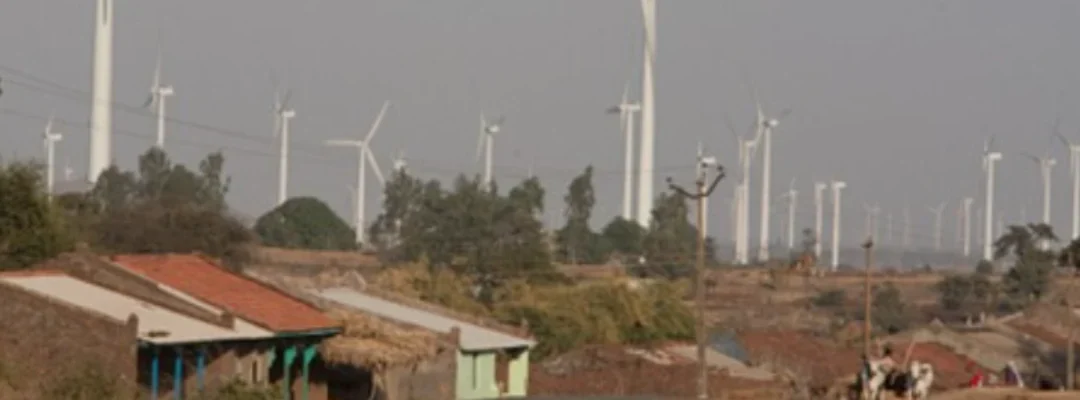
Rural areas need reliable and affordable power. In many places, power cuts, diesel costs, and distance from strong grid networks can make daily life and work harder. This is where small wind turbines can help. They can produce electricity close to where it is needed and support farming, small businesses, public services, and basic community needs. In India, NIWE says small wind systems are used for rural electrification, community lighting, telecom towers, water pumping, and hybrid systems. NIWE materials also describe small wind in India as systems of up to 100 kW.
What is a small wind turbine?
A small wind turbine is a smaller wind power system made for local use. It is not like the very large turbines used in big wind farms. A small wind turbine is usually installed near the place where the electricity will be used, such as a farm, school, clinic, telecom tower, or village facility. In India, these systems are often linked with local applications and hybrid setups.
Why small wind matters in rural areas
In rural areas, energy is not only about lights. It affects farming, water access, communication, education, health services, and income. When power is weak or expensive, it becomes harder to run pumps, charge batteries, keep businesses open, or provide services on time. Small wind turbines can help by bringing local power closer to the user, especially in places where the grid is weak or diesel is costly. NIWE and related programme documents highlight rural electrification and water pumping as key uses for small wind in India.
Supporting water pumping for farming
One of the biggest ways small wind can support rural livelihoods is through water pumping. Farming depends on water, and many rural families spend a lot on fuel or electricity for irrigation. Small wind systems can help run pumps in suitable windy locations. NIWE programme material specifically lists water pumping as a major use of small wind systems. This can reduce fuel use and support more dependable farm work.
Helping rural homes and community services
Small wind turbines can also support community lighting and rural electrification. This can improve daily life in villages by supporting lights, charging, and power for shared spaces. Better local power can help schools, village centers, and small public facilities work more smoothly. NIWE includes community lighting in remote areas and rural electrification among the main applications of small wind systems.
Supporting telecom and digital access
Communication is now a key part of rural livelihoods. Farmers, workers, students, and local businesses all depend on mobile networks. But remote telecom towers often need dependable power in places where the grid is weak. NIWE case studies and presentations identify telecom towers, including remote rural sites, as an important use case for small wind and wind-solar hybrid systems. When telecom sites get better local power, communities also benefit from stronger communication access.
Helping small rural businesses grow
When local power improves, rural shops and small businesses can work better. Tailoring units, repair shops, food processing, storage, and service businesses all need electricity. Small wind will not fit every business, but in the right place, it can support local power needs and reduce dependence on diesel. WRI India notes that small wind and small wind-solar-battery systems have use cases in villages and remote locations, showing their value beyond only one type of site.
Working well with solar in hybrid systems
Small wind becomes even more useful when it is combined with solar and batteries. In many rural areas, a hybrid system can give better energy balance than one source alone. NIWE documents show small wind can be used in wind-solar hybrid systems, and WRI India points to applications for small wind-solar and wind-solar-battery setups in remote sites and villages. This is important because the wind may be stronger at times when solar is weaker, helping improve overall power availability.
Better energy can support better incomes
Reliable energy can help rural families and communities in many simple ways. It can support irrigation, keep village services running, improve digital access, and create better conditions for small enterprises. That is why small wind can support livelihoods, not just electricity supply. It helps people do more with their time, equipment, and local resources when the site is suitable for wind energy. The government’s small wind programme was created to promote these kinds of decentralized uses, including water pumping and hybrid systems.
But small wind is not for every village
Small wind is useful only in the right location. Wind is not the same everywhere. MNRE says wind is an intermittent and site-specific energy resource, so proper wind resource assessment is essential before choosing a site. This means small wind should be installed where the wind is good enough and the system matches the real local need. Without that, the results may be weak.